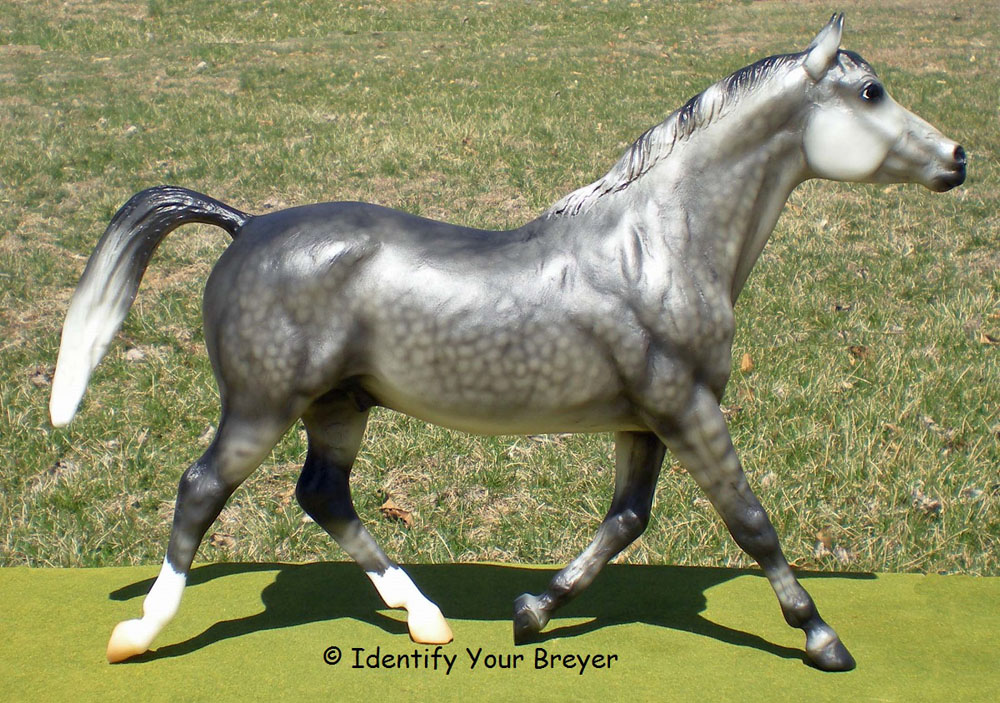
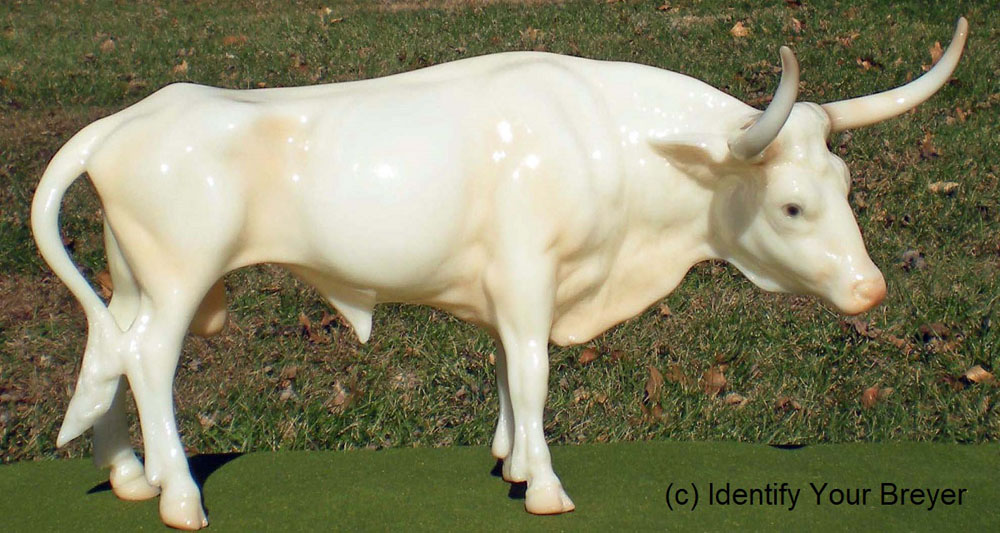
Showing posts with label Woodgrains. Show all posts

Saturday, January 6, 2024

Credit, Where Credit Is Due

I am still not feeling great, but I am definitely better than I was a couple days ago; I’m hoping this course of treatment is successful, so I can actually move on and finish all the stuff around the house I couldn’t do over my Winter Break. 

Technically I am not in any condition to rant further about the distressing turn the generic (nonportrait) Special Runs for this year’s BreyerFest have taken, but I have to say that I am finding it increasingly more depressing than the Horse Heroes situation. At least those were named after “heroes” of a sort; the connection between “overcoming adversity” and “Girl Power ballads” is more than a bit stretched.

All marketing, in the end, is a cash grab capitalizing on current trends and fads, so I tend to cut most companies a lot of slack when it comes to new product marketing: the purpose of a company is to make money. (I get into this argument with people at work all the time. “Why are we making this, and not that?” Because that’s what’s selling right now.)

But this turn feels so obvious, contrived, and contrary to what they themselves have been trying to do for the past several years, which is make the hobby more inclusive. A balance could have been struck here; you could have folded “Girl Power ballads” into it with just the Stablemates, and not steer the entire theme in that direction.  

Nope, never mind, let’s go back to yet another variation of Princesses and Cowgirls!

Bummer for all of us who are not sparkly pink aspiring Girlbosses. 

(I wear size 11 shoes look terrible in pastels, and am a bookish introvert: it was never an option.)

The 2024 Regular Run releases are actually pretty great, though. I especially like the Element Series Collection Classics, based on the Eastern – rather than Western – Elements. I think my favorite is the Harper Iridium, because it reminds me of the metallic Super Chase Stablemates I have been utterly unable to locate. Teak is also intriguing; is he the first official Classics-scale release in Woodgrain? My brain is a bit addled by the painkillers, so I am not so sure at the moment…

I am absolutely not a skier (hello, total lack of coordination bordering on disability), but I really like this year’s Christmas Horse Après Ski, too. A Red Bay Big Ben with a Gulastra Plume? Clever, attractive and imaginative – now that’s the (lift) ticket!

I’d like to comment further on the Halloween Horse Beowolf, who initially garnered a pretty enthusiastic response because hello, we are all nerds here. But now that it appears that the design may be at the center of a potential controversy, I’ll wait for more info on that developing story before I say anything more. 

Sunday, November 19, 2023

Cooler Things

It just amuses and baffles me that I can’t “win” 1000-piece Special Runs, but Test Colors, 50-piece runs, and things other hobbyists are like “what, they made that?” No problemo!

(Yeah, still no Vail. At this point I’m just laughing and shaking my head about it.)

The Bay Lady Roxana has soared past my upper bidding limit; but that’s fine: I went and bought some box lots on the Internet for less that are probably worth more; I’ll find out by the end of the week!

So here’s another cool thing I have been looking for for an insanely long time:

As you might have guessed – because it’s me we’re talking about here – this is no ordinary Family Arabian Foal. Check out the location of her mold mark!

(Just above the drip mark.)

The belly-stamped Foals are obviously very early; in fact, I think they represent the “first state” of the mold, before any of the multitude of other changes were made to it. 

The Family Arabian Foal was likely Breyer’s most popular and in-demand mold through the 1960s and a large portion of the 1970s, and because of the wear and tear of near-constant production, it went through many repairs and revisions. So many, in fact, that with a little extra research, we could probably create a pretty accurate year-by-year timeline of the changes.

(Sorry folks, I do not have the time for that right now!)

Looking for a belly-stamped FAF has been awkward, to say the least, and is complicated by the fact that the best place you would think to find something like this – BreyerFest – has also become one of the less likely. Unless it’s a Test Color, Oddity, Rare SR, New in Box or another known rare variation (like the Sorrels), people don’t bring Family Arabians to sell, because they’re old-fashioned, common and allegedly boring. 

Fortunately, on places like eBay, a lot of sellers don’t know or don’t care: they just want to make a sale. The more diligent ones do what sellers selling items outside of their comfort zone usually do: they photograph everything, including the location of the mold marks. 

Although there are instances where the presence or absence of certain mold marks is historically important, usually it isn’t, so most of us roll our eyes when we see that photo included in a listing. Yeah, I already know that’s a Breyer, doofus.

But in this case, it’s what made the difference for me. I immediately saw it and jumped on it like a cat on a can of tuna. 

I’m beginning to wonder if the FAF was the first – or one of the first – molds to receive the mold mark, before they decided that putting it on the inside hind leg was the way to go. The change happened very quickly, and before they revised the curled eartips: curled eartip FAFs with the standard leg stamp are a little uncommon, but not super-rare. 

(The Shetland Pony also received a belly-stamp around the same time, but it never got removed or repositioned).

Theoretically, the Belly Stamp Foals should only exist in the original four Family Arabian/Old Mold colors: Alabaster, Bay, Woodgrain and Gray Appaloosa. Palomino and Charcoal didn’t show up until later; how much later I am not sure, but I do know I still haven’t found any evidence of Palomino or Charcoal FAFs with the curled eartips.

I haven’t done a comprehensive, point-by-point study of the Foal to figure out what else was changed or corrected from the first state of the mold to the second. Having a sample size of only one is also not helpful, because you don’t know if the variations are the result of a molding or production change, or just something idiosyncratic to that particular Foal.

The Foal’s legs are definitely not in the same places as most of my later examples, but that could just mean the cooling boards weren’t ready yet and everything was assembled by hand, as was the case with the original In-Between Mares around the same time.

Even though Breyer had been producing horses for nearly a decade by the time this Foal was manufactured, she does feel a little – primitive? Maybe they had rush orders to fill, and even though they didn’t have a production process or even all the equipment “ready”, they just got them done by any means necessary?

(I work in a production facility: some of the crazy stuff we do to get product out the door...)

The real question, though, is this: just how rare are these Foals numerically

Well, the first problem here is that we don’t have any production records from this period to establish a lower limit. We also have to consider that the mold change happened very early, maybe/likely after the first production run; this first production run could have even been a test batch! It’s been over sixty years now since they were produced, so a lot of them have gone to the model horse graveyard by now, too. 

So my guess (and experience!) would say that unless several come out of the woodwork like the Woodgrain Old Mold Foal did, I’d say she was pretty rare. I do think these Foals are probably a little more common than we realize, because most hobbyists have been unaware of this variation’s existence, until now. And now they will look!

I’d love to have a complete set of four, but I’m happy with just the one, for now.

Tuesday, September 20, 2022

Shape and Texture

Not a great weekend, but I did get most of the quilt batt stuff sorted out and a very preliminary showstring put together. Just a few additions, a few subtractions, and nothing fancy-fancy or exotic: as much fun as it is, I don’t have time for the documentation that would involve. 

Plus I found out last week that we’re all on mandatory overtime at work for the time being, which means it’s not even a matter of finding the time. There is no extra time to be had! 

I did have a few moments over the weekend to open up a few packages that have arrived over the past several weeks (don’t get me started!), including an extremely affordable Blue Christmas Zebra! 

I don’t have the complete set yet, because (as I hope you all know by now) I am a very patient cheapskate. Because the Coal is completely off the table for obvious reasons, all I need now are the Green and the Gold. (I know he is not perfect, but neither am I, so it all works out.)

(I’d like a Cave of Lascaux, too, but I’m not holding my breath on that one either.)

Another recent arrival was a little more pricey, but it was about that time of year for me to buy my one really expensive thing, and this was it: 

Although the #971 Horned Hereford Bull was manufactured in Woodgrain through 1964, he is not particularly easy to find. I suspect that his production run numbers were low because the rough texture of his coat made him difficult to paint; the only other Breyer model with a similarly bumpy surface that made it into Regular Run production was the Large Poodle, who ran – probably not coincidentally! – the same years as the Bull. 

Other models with textured surfaces that eventually came out in Woodgrain – including the Polled Hereford Bull, the Buffalo, the Elephant and the Donkey – were all likely Special Run items of extremely limited quantities.

(I’m not 100 percent sure on the Elephant, but let’s not get into that discussion today.)

The Poodle is slightly easier to find, and cheaper too, but that’s because there are fewer Breyer Dog collectors than there are Bull collectors. And those Bull collectors are why I’ll probably never be able to complete my Walking Horned Hereford collection: there ain’t no way I am ever paying $1500 for a Bunyan, full stop…

Tuesday, May 18, 2021

My Monday

Checks e-mail.

Sighs.

Crosses Emerson off my “I Collect This Mold” list.

Wonders why I even bothered.

Buys some random cheap horses on eBay.

Goes outside to pull weeds.

Comes inside, opens newly arrived box with a completely different and significantly cheaper Breyer Race Horse:

I still can’t believe I bought a #936 Woodgrain Race Horse with its original Gold Foil Tenite sticker for less than the cost of… well, almost anything else now.  

I had a Woodgrain Race Horse before, but it wasn’t the one I was hoping for. This one might be – unless I manage to find an even nicer one at an even better price, though I doubt it. 

Eventually this market bubble will burst, so I might as well take advantage of the bargains where I can find them. 

Incidentally, this is only my third model with a Tenite sticker – including a Brahma Bull and a Family Arabian Stallion, both Woodgrains. 

Tenite stickers are a little harder to come by than the Blue Ribbon variety, and are mostly but not exclusively found on Woodgrains. 

I think Breyer originally intended to use the Tenite sticker on all of their models when it debuted ca. 1959 – I’ve seen it on Western Ponies and Old Mold Arabians in other colors – but it eventually morphed into a Woodgrain thing. 

Most of the Woodgrains – with the exception of the Family Arabians, and the Fighting Stallion – were discontinued by the time the Blue Ribbon stickers debuted ca. 1966. Consequently, they’re the only Woodgrains that can (very rarely) be found with the Blue Ribbon stickers.

Sunday, March 15, 2020

Bittersweet Complexity

The past few days have been bittersweet. Not only did the money I was anticipating finally arrive, but I finished my taxes and found (as I hoped) that I’d be getting a refund for the first time in many years. And both amounts were significantly larger than I expected.

Combined, they would have more than covered the trip to Seattle.

But alas, luck was not on my side, and no amount of money can turn me into one of those people who gets picked for everything they hope for.

My luck (lately) has been running more towards finding random rarities on eBay, and I am mostly okay with that.

The money won’t go to waste: there are plenty of purchases I’ve put off for months (and years!) that I can finally catch up on. And BreyerFest will definitely be more stress free, without the pressure of having to make as many sales to pay for it all.

(Assuming the world is closer to normal by then. Which – for the sake of my sanity – I am assuming is going to be the case, unless evidence or circumstance change.)

I can also go ahead with my plan of buying “a few glorious things” – at retail! I’ve decided to wait until BreyerFest to buy the Gloss Dapple Gray Belgian of my dreams, and one or two others if the opportunities present themselves like an earlier/homelier Auction Test Color, or a scarcer-than-average Woodgrain like a freestanding (never mounted on a lamp) Running Mare or Foal.

The latter may seem surprising because hobbyists tend to forget that the actual Regular Run #920 Woodgrain Running Mare and #930 Foal were only in production from ca. 1962 through 1965. A significant percentage of loose Woodgrain Mares and Foals on the market are actually ones set free from Ranchcraft Lamps.

Which are, themselves, likely later – or as I sometime call them – Post-Production Special Runs. In other words, separate releases entirely.

Sometimes it even feels like the Woodgrain Lamps Mares and Foals are more common than the freestanding pieces, but I think that’s more of a consequence of their manufacture. Many of the freestanding pieces ended up as toys, with a higher attrition rate than lamps, which as furniture don’t get manhandled quite as much or discarded quite as easily.

We genuinely don’t know much about production quantities of Regular Run models from the 1950 through the mid-1980s – and what the average attrition rate was for those models as they traveled through time to today.

To make a long story short: rarity is complicated, and more relative than you might imagine. So buy what you like at the price you are comfortable with.

Friday, December 28, 2018

Bacon and ... Golden Corn?

These fellows arrived a day early:


More or less what I expected on both.

Even though I would have preferred the Green one – or the black Brighty, ‘natch – the color on my Gold Othello is very similar to the Perlino Duns I keep missing out on, so there’s that. The shading is softer and more natural looking than the Blues or the Greens (which, duh, makes sense!)

I won’t be pursuing trades or outright purchases of the others, though. Aside from not being able to afford it, I’m kind of in the middle of my end-of-the-year cleaning and purging phase: my mind is more on what I want to sell, rather than buy.

(I was pretty proud of myself, being able to walk out of the Tractor Supply Breyer-free on Wednesday! I’ll regret it later, more than likely…)

Plus space: Othello’s a big dude, and I’ve already been told the fireplace mantel is off-limits!

I do feel kinda sad about some of the Othellos that will now be resold, for the sole sin of not being a Solid Black Brighty. Gotta hand it to Reeves for turning the hobby’s general disdain for Solid Black paintjobs on its ear: first the BreyerFest Dark Horse Surprise, and now the Coal Brighty!

I would have bought the Santa Surprise regardless, and pretty much did.

The Brighty was a nice gesture, but ultimately unnecessary: selling out would have just happened slightly later in the day. I know some people have suggested that a Glossy Black Othello Unicorn would have been even better or more appropriate, but I personally think if that had been the case, it would have ended in tears and bloodshed.

Hawthorn is… interesting. The woodgraining is a little more subtle than I expected, but not out of the range for a vintage Woodgrain; I have a Shetland Pony with similarly low contrast graining.

I was also kind of hoping he’d have a dark drip mark on his underside, as the vintage ones do. Since they’re using a somewhat different technique now compared to what they used back then, and that drip was a consequence of the original technique, that was perhaps asking a bit much.

Some less seasoned hobbyists who might not yet have experienced vintage Woodgrains firsthand might have perceived it as a flaw too, and make a fuss accordingly.

One last little factoid before I call it a night: the last production Woodgrain – the #931 Fighting Stallion – ended production in 1973, and the Jasper mold was introduced in 1974. Since they would have been testing colors on him in 1973, vintage Woodgrain Jaspers are theoretically possible, but unlikely.

Tuesday, December 18, 2018

Conflicted

When we were kids, we used to make jokes that if Publisher’s Clearing House ever came to our house, they’d never be able to use the “Happy Winner Gets a Giant Check” video in their promos because the first words out of Mom’s mouth would be something along the lines of “It’s about (****) time you got here! Do you know how many stamps Ive spent on your contest?”

Then she’d grab the Giant Check, mutter “Well, thanks, anyway” and then unceremoniously close the door on them. End of footage.

That was the first thing that popped into my head when I read this e-mail I received today:


Considering the number of very kind offers to purchase the Hawthorn of others (thank you all for offering, incidentally) I almost got the feeling that they only got to my name because they’d run out of everyone else. By now, the only other accounts left on the list are ones in people’s pets names whose owners already been selected on their human accounts.

(I kid… but only slightly.)

(No, incidentally, Vita doesn’t have an account.)

I am happy, but conflicted about it. I’ll give myself a day or two to decide.

Another conflict: the Collector’s Club Appreciation Box arrived yesterday. Open now, or open Christmas Eve, as planned?

I will probably wait until later, only because opening it means cataloging the contents, and since I bought a lot of Stablemates, that could take some time – time that I genuinely don’t have right now.

(This week: I need to bake cookies for a party, take my car in to get a melted wiring harness replaced, get caught up on three weeks worth of emails, finish the mountain of financial paperwork on my desk….)

I am also conflicted about the news that the solution to the order mishaps is going to be… make more models Glossy?

I have a feeling this year’s two-step system was set up to better track their inventory, but if only the “complete” orders were counted before it was declared “sold out”, that could potentially mean hundreds of incomplete orders could have been logged in during the interim.

(I have no idea. I am just speculating on the numbers here.)

If it were just a dozen or so added to each run, I wouldn’t be that concerned. But if it ends up being 40-50-60 of each, that will seriously skew the production numbers that some hobbyists base their purchasing decisions on. While I happen to think that hobbyists place too much emphasis on rarity over all other factors in determining collectability, it is still a factor, nonetheless.

I kind of hope they go the Logan/Colton route and Gloss up a sixth model to cover the mistakes. Same quantity or slightly more, if necessary.

All I hope is that they do release the revised numbers, because changing the quantity just doesn’t affect the present or future value, it also created live showing documentation issues.

Sigh.

Let’s end on a happier note – I am pretty psyched that a movie I’ve been wanting to see for a while is getting rebroadcast on Turner Classic Movies on Thursday: You Never Can Tell! It’s about… well, here’s the most succinct summary I found:
Beginning with a far-fetched premise—cracker tycoon leaves fortune to dog—Lou Breslow’s movie swiftly plunges into full-on derangement, as the dog is reincarnated as a detective and tasked with solving his own murder, assisted by a reincarnated lady horse.
There’s a trip to Animal Purgatory, Dick Powell eats dog food, and his sidekick – the former racehorse – flirts with other horses. As a person.

In other words, my kind of movie!

And it’ll be a nice change of pace from the usual holiday movie reruns.

Tuesday, December 4, 2018

Old News, New News

Whoa, lots of news today.

Finally got another reveal on the Vintage Club – the (mostly) Gloss Charcoal Shannondell Claude!

This is old news for me, but probably just about the hardest to keep on the down low, especially when I saw so many hobbyists saying… some less than nice things about the Vintage Club program.

I am especially pleased with the added dash of randomness, with the addition of 30 Mattes in the mix. It also makes sense: historically, Matte Charcoal releases have been far scarcer than their Glossy counterparts.

They just seem less rare because the models most people think about when they think of Matte Charcoal are the Family Arabians. And Family Arabians, themselves, are almost the very definition of not rare.

Earlier Gloss Charcoal releases like the Running Stallion, Mustang and Fighting Stallion didn’t make the transition to Matte like the Family Arabians did. Since the Family Arabians were discontinued in that color in the early 1970s, the vast majority of Charcoal releases have been Gloss, not Matte.

(Though Matte Charcoals as Tests and Samples aren’t completely unknown. There is a Matte Charcoal Lady Phase in one of Marney’s photo albums that I would definitely elbow someone over.)

Ironically, it appears that most folks are of the opinion that getting the Matte version of Claude would be like getting the proverbial lump of coal in one’s Christmas stocking.

Of course, I want him, but I’m not going to pay extra if I receive a mere Gloss. Just because something is technically rare doesn’t necessarily mean it should have a price to match.

(I’d love to have a Gris Gris, for instance, but I don’t plan on spending much above his issue price when I do take the plunge.)

I am more conflicted about what appears to be the Holiday Animal release, a Woodgrain Jasper named Hawthorn:


That was not what I expected. The Woodgrain part is great – I’m all for more widely available new Woodgrain releases – but I’m confused about it being so large a run (350 pieces) for a piece that caters to a very narrow niche. This feels like it should have been a Micro Run, or at the very least a First-Come, First-Served piece like the previous two Animal releases – the Longhorn Bull Olaf and the Gold Charm Cow and Calf Eldora and Sol.

Oh, I’ll enter the Purchase Raffle, but the way my luck goes with these things I won’t get picked anyway. So I’m probably safe either way?

Not going to sweat this one, regardless.

Thursday, December 28, 2017

Overstock

Although tempting, I am not biting on the Warehouse clearance sale, especially since some of the best deals are on items I just purchased for the Customer Appreciation Offer!

It is kind of fascinating to look at the overstocks and see what Glossies could have been: the Icelandic, Chocolate Chip Kisses, Brunello, Smokin Doubledutch, Welsh Cob, Highland Pony, Irish Draught, the Traditional Foal and Blanket Sets, the Black Adios Fonzie Merit?

Any of those would have been fine by me. (Glossy Solid Black Adios? Yes, please!)

The local Ollie’s had at least a dozen of those Rocky foals – in Matte, of course, and at a better price – and if it wasn’t for the credit card bill I’d be seriously tempted to get one. I have a bit of a soft spot for the homely little Standing Stock Horse Foal; he’s another one of those later Hess sculpts I think could really shine with just a modest amount of cleanup and customizing.

There has been quite a bit of misinformation floating around in the hobby about the nature of inventory and overstock, and it’s been bugging me, a lot. That’s because these are things I happen to be intimately familiar with on a day-to-day basis at work.

So let me provide a little illumination.

Overstocks aren’t always or even necessarily the result of bad business decisions or factors within anyone’s direct control. Production issues, mathematical errors in sales calculations, shipping problems, communication issues, seasonal variables like weather or natural disasters, or sudden changes in taste or fashion: all of these things can lead to overstock.

The other problem is as old as retailing itself: no matter how carefully you plan, there will always be leftovers.

Legitimate, boneheaded mistakes do get made, but true mistakes are far fewer of than most of us might realize, and the decisions that led to them being made often seemed quite logical at the time.

I think the original Blue and Gold Decorators of the 1960s were a case in point. A significant chunk of Breyers, even in the 1960s, were purchased strictly as home decorating accents, and Breyer had had modest success marketing their Woodgrains as such.

So it did not seem too outrageous an idea to expand upon that with other less realistic and more decorative colors, especially ones that would have been easier to paint than Woodgrains.

Things did not go as planned, obviously.

If they had debuted a few years later, that idea might have even succeeded, but that’s another lengthy discussion in and of itself.

Breyer has always had overstock issues, though things were definitely different in the Chicago era. They could get away with having items sit in backstock for a while because production runs were measured in years or even decades back then: if they felt they were a little overstocked on something, they could just cease production for a while and sell down whatever they had sitting in the warehouse.

What didn’t sell after a certain period of time could – and would! – get shuttled off to mail-order companies like Horses International and Bentley Sales. And if there were items they still couldn’t pawn off on them (like, the original Decorators) they could repaint them or Chalk them up, and move them out as a new or better-selling release – or even a Special Run!

A big chunk of those Black Family Arabian Special Runs in the late 1970s appears to be overpainted backstock of Family Arabians in all the colors discontinued in the early 1970s.

Because the product life cycle is so abbreviated now – it’s rare for a Regular Run Traditional to make it to its second year of production, nowadays – Reeves does not have the luxury of time: overstock can’t sit in the warehouse for months or years to sell down, because they need room in the warehouse for new product now.

The easiest way to do that is to contract with retailers that deal with overstocks (like Tuesday Mornings and Ollie’s) to make room on an as-needed basis.

So it is difficult to say or judge how well Breyer is doing as a brand (or Reeves, as a company) based solely on what we see in the stores. It’s a little more complicated than that.

Regardless of what is going on behind the scenes (I don’t know all that much more than you guys, and sometimes even less) all I can say is that I hope the “Glossy Customer Appreciation Promotion” becomes a regular holiday offering.

Thursday, October 22, 2015

Dimples

The one actual nice piece from that box of horrors: a mostly lovely Woodgrain Five-Gaiter!


Woodgrains are almost as hard to find as Blue and Gold Decorators in my part of the world, which I find odd; near as I can figure, retailers either didn’t sell them in this area, or buyers weren’t interested. Any time I bring home a Woodgrain that isn’t a Family Arabian or Fighting Stallion, it’s usually cause enough for dancing. Or cake.

I described this Five-Gaiter as mostly lovely: he does have condition issues. Some are the usual minor condition problems that show up with most vintage models found “in the wild”: eartip rubs, hoof rubs, a few high point nicks and dings. Nothing significant or out of the ordinary.

He also has two factory condition issues. The first you can’t really make out in the photos, but his graining coat is slightly pixilated. Basically, that paint/stain was either a little too wet, or the conditions in the factory were just a little bit too humid, causing the paint to bead.

It’s not the same thing as the bubbling that sometimes occurs on Woodgrains, but it is probably related somehow. I’m not planning on testing the theory: I plan on keeping him cool, clean and dry as long as he’s an occupant of this house.

His other problem is a little more amusing:


He has matching butt dimples! More precisely, these are sink marks: indentations in molded plastic that sometimes occur in thick-walled or solid areas of plastic, primarily due to uneven cooling rates. Basically, the plastic starts to cool before that section of the mold is completely filled, pulling it away from the mold wall.

Sink marks are not an uncommon thing to find in Breyer models, especially in the 1970s; just about every Proud Arabian Mare that I ever owned had them on their hooves. Sink marks this big – and matching! – are a little less common.

Both sides of the mold are molded simultaneously, so the fact that they “match” shouldn’t surprise: each side has a similar wall thickness, and experienced the same amount of heat, pressure, and so on. It’s the degree and the placement of those sink marks that surprises, and amuses.

Many naughty euphemisms come to mind. I’ll be good and leave those to your imagination.

Friday, March 13, 2015

Almost Forgotten

Another surprising sales cull from my herd:


You’d think that a Woodgrain Racehorse would be precisely the kind of model I’d keep without a second thought. I like Woodgrains and I love old, rarely used molds, but I find myself with no particular attachment to this model.

He came to me in a group lot on eBay a few years back, but I can’t recall if there was anything otherwise noteworthy about his arrival or provenance. In other words, he came without incident or story.

The same can be said of his condition and overall quality.

I’d like to think of myself as the forgiving sort when it comes to Woodgrains and their condition and quality issues; the scarcity of Woodgrains in my area has made me that way. Usually I’m so overjoyed to find any Woodgrains at all that I’m willing to overlook a few skips, drips and smudges. Heck, I have a Woodgrain Fighting Stallion who is nothing but smudges!

This guy is in better condition than the handful of other Woodgrain Racehorses I’ve had in my possession - a few bubbles and minor scuffs, nothing major. The woodgraining is a little funky, but not in a sufficiently weird or interesting way like that Fighting Stallion.

Still, a model like this shouldn’t have been buried in one of my storage boxes, largely neglected and almost forgotten. All of my other vintage Woodgrains - aside from a couple of Family Arabian variations and a Clydesdale with some condition issues - are out and on permanent display.

The Racehorse is not recognizable to most antiquers as a Breyer, so when they do show up, they are often identified as the "not a Breyer" of whatever little collection they may happen to be in. That’s because aside from the fact that it doesn’t really look like most Breyers (the lack of detail, the smaller scale), the Racehorse doesn’t come with any mold marks, either.

There are quite a few early Woodgrains without mold marks, come to think of it. The earliest Poodles, the earliest Clydesdales, the Western Pony, the Boxer, the Old Mold Family (Stallion, Mare and Foal), the Fury/Prancer, and some of the Bulls can all be found without mold marks, in the Woodgrain finish.

Their lack of mold marks doesn’t seem to make them any easier to find. Like most everyone else, when I do find Woodgrains they tend to be Family Arabians and Fighting Stallions, not the oddities or the rarities.

The #936 Racehorse is something of a minor exception to the rule, but that’s because he’s "common" compared to some Woodgrains - with a decent run from ca. 1959 through 1965 - and not as desirable as most. While he does have his fans, he’s definitely an acquired taste.

I wouldn’t mind adding another Woodgrain Racehorse to the herd, but I feel like I’ve let this little one down somehow. I’m letting him go because he deserves a better home than the one I’ve given him so far.

Thursday, April 24, 2014

More on Woodgrain Variations

Keeping it light today, as I’ll be on the road for most of it.

Following up on the comments in the previous post, yes, there is a Variation of the Fighting Stallion that comes without markings. I’ve seen enough of them - just missed getting one on eBay, not too long ago - that I think it’s safe enough to call it a legitimate Variation, and not merely a natural (accidental, day-to-day) one.

The Woodgrain Fighting Stallion was in production from ca. 1960/1 through 1973, about twice as long as the Family Arabians. Anything in production that long is going to have some variation in the run, intentional or not.

I have had a lot of Woodgrain Fighting Stallions over the years, but my favorite is Smudgy. Remember Smudgy the Woodgrain?


Definitely a small-v variation. I haven’t seen anything else like him, except for some early attempts by faux finishers to replicate Woodgrain. Smudgy’s definitely the real deal - I see no evidence of tampering anywhere on him. His finish is fine, smooth, his markings are perfect, and he still has most of his footpads. But he looks more marbled than woodgrained.

Near as I can guess, either he was a salvage job on an otherwise subpar woodgraining job, or the product of some serious goofing off at the factory. Or maybe they were experimenting with a more "realistic" Woodgrain finish that day. Don’t have a clue, I’m just glad he’s here.

Truth be told, I don’t have a whole lot of Woodgrains here at the Ranch. Other than the Family Arabians, and my assortment of Fighters (light, dark, Ranchcraft Lamp, Smudgy…) all I have I either obtained at the flea market (Shetland Pony, Boxer, Running Mare and Foal Lamp) or in box lots on eBay (Racehorse, No Muscle Clydesdale Stallion).

And a Brahma Bull with a Tenite sticker that I bought in a fit of pique, because I wanted to buy something scarce and pretty and not in need of any significant repairs, for a change.

So nothing exquisitely rare or desirable, as far as Woodgrains go. Unless Smudgy counts.

My Clydesdale might, too.

The Clydesdale was purchased in a lot with a Test Color Classic Andalusian Stallion and a variation of a Christmas Catalog Special Run. As far as I can see physically, there’s nothing to suggest that the Clydesdale is anything other than what he appears to be: a standard, production run #980 Clydesdale.

However, the fact that his box lot buddies were so unusual, and the seller’s address was in suburban Chicago, make me wonder if he’s something more. I didn’t follow up with the seller as I should have, and I haven’t had the chance to pick up a Woodgrain No Muscle Clydesdale with a more conventional pedigree to compare, either. So for the time being he remains an average, run-of-the-factory Woodgrain Clydesdale with an intriguing provenance.
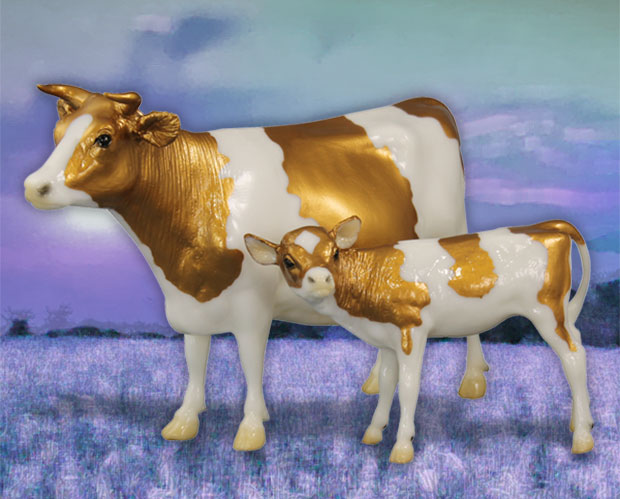
But back to the other suspect Woodgrains in the last post.

I find their lack of markings a little suspicious because Woodgrain Variations, outside of the occasional obvious cull, are rather unusual. The variations that do occur are more a matter of color or quality of woodgraining - like Smudgy. (Also occasionally, as in the case of the Clydesdale, one of mold.) When unusual or distinct Woodgrains do show up, they sell quickly, and for not insubstantial amounts of money.

(Smudgy is not going anywhere. Don’t even think about it.)

As I said before, I haven’t heard of or seen Five-Gaiter or Mustang Woodgrains without markings, which means that they’re rarer than the Fighters, which themselves aren’t easy to find. This suggests to me that if any exist at all, they’re either Tests or genuine Oddballs.

Pictures of the Classic Andalusian Test, next time.

(The Woodgrain Clyde is currently not in the display rotation, and the basement is in the process of being prepped for painting, so storage excavating is not an option right now.)

Sunday, April 20, 2014

Easter Eggs

Spent the Easter weekend cleaning up the yard, and the office. When either endeavor began to frustrate, I had another one of my "Why isn’t this one done yet?" quilt projects to distract me.

Once all three projects are completed, I’ll move on to BreyerFest stuff.

I made good progress on all three because I’ve been trying to limit the computer time. Just too many aggravating hobby personalities and situations I don’t want to deal with, even in the most passive ways.

Except for one. While I don’t have a vested interest in any of the locations for next year’s NAN, as it is unlikely that I’d be able to attend regardless, I am extremely curious to see how the current NAMHSA crisis du jour turns out.

I have had my issues with NAMHSA - I think they spend too much time focusing on an end result (the "Big Show") and not enough time focusing on foundational issues (like the reason and purpose of The Show in the first place). Some of the individuals in charge have occasionally fallen into my personal "don’t want to deal with" group.

Yet curiously, and unlike a lot of hobbyists, I think everything will be fine in the end. The existence of dysfunction is not the problem: stuff happens, no matter how much or how well you plan. How the dysfunction is dealt with is the truer measure of judging an organization's viability.

Maybe I’m a little inured to some of the drama because I’ve been in the hobby long enough to have seen most of it before. I’ve also dealt with similar issues in other interests of mine and know it is not unique to us. (Google "SFWA Controversies" if you want to see some real hair-raising stuff. And today, apparently, the 2014 Hugo nominations. Yikes!)

You made it this far with my pontificating, so here are a couple of pictures from Marney’s Album, as conciliatory Easter Eggs. Notice anything odd about them?


No socks! There are a number of photos of Woodgrains in the album, all taken around the same time frame (1970-1971). While some of the pieces are undoubtedly true Production Runs, these two pictures - and a few others - make me wonder if these were Test Colors, or something, on Marney’s part.

Woodgrains had been largely discontinued at that point - only the Fighter remained in production by 1970 - but we know that Special Run Woodgrains were being made in the late 1960s and into the early 1970s for the Dunning Industries Ranchcraft line.

It’s hard to identify those later Special Run Woodgrains, absent their presence on lamps, because there’s no way of distinguishing them from earlier releases. We only know that Non-Fighting Stallion Woodgrains were manufactured (and not simply pulled from warehouse backstock) after 1966/7 because Running Mare and Foal lamps can be found with USA marks, as well as Woodgrains of molds that simply didn’t exist prior, such as the Polled Hereford Bull.

All of the other Woodgrains in the album are on molds that had been released as Woodgrains before, so they could all be items from her collection that she had picked up elsewhere.

Yet there are other photos in the album of pieces that are clearly attempts at reproducing vintage molds in vintage colors, like the Old Mold Mares I’ve mentioned here before.

There will never be any definitive proof unless one of those album pieces does show up - and only if it has a USA mark. I haven't seen or heard of any so far, but I’ve seen a lot of unlikely things, especially lately.

Wednesday, March 5, 2014

Grand Wood Carving Man o' War

I’m feeling much better, and Vita - sensing the opportunity - reverted back to her old, bad ways. So far this week she’s eaten my toothbrush, stole my cough drops, knocked over the kitchen trash can (multiple times) and pooped in the house.

Some of it may have been a response to getting a haircut on Monday; everyone tells her how pretty she is, and it goes straight to her head. (Seriously, she knows. Her groomer used to show Wire Fox Terriers, and is always cooing to her what beautiful little dog she is.) You know how some pretty girls are, think they can get away with anything.

The schedule for the rest of the week got weird, so I can’t do anything much longer than post a picture today. It’s an interesting one, though:


While it’s fairly well-known that the #36 Racehorse is based on the Grand Wood Carving sculpture of Whirlaway, it’s less known that the #47 Man o’ War is also based on a Grand Wood Carving sculpture.

I haven’t been fortunate enough to locate myself a Whirlaway, but this Man o’ War turned up on eBay a few years back, and I was delighted to be the winning bidder at a not-unreasonable price. Although mass-produced, technically, they were expensive new and are not easy to come by now.

The only other horse I’ve seen for sale, in person, was in an antique shop in Lexington. (It was an Alsab!) I’ve seen several more on the Internet, but not at prices I feel comfortable paying. If I do locate another, it’s going to be a happy accident and not a planned one. 

Some other time - when I have more time - I’ll talk about the relationship between Grand Wood Carving sculptures, Breyer Woodgrains, and Chris Hess. I want to do a little more research on the subject, too.

Tuesday, February 18, 2014

More on the Woodgrain Revival

Feeling just slightly under the weather (probably due to the weather) so here’s a scan I wanted to include in my discussion about the new Woodgrain Clock Saddlebred. It’s from a note from Marney Walerius to Peter Stone, attached to a flier for the 1976 Model Horse Congress, and it gives you an indication of just how long the Woodgrain Revival has been in the making:


1976: that’s just three years after the Woodgrain Fighting Stallion was discontinued, in 1973. Positively microscopic in Breyer time.

Woodgrain Proud Arabian Stallion? Gah! I know he’s no fan favorite, but I can’t even imagine what would happen to the Internet if he (a) did exist, and (b) showed up on eBay or MH$P. (And the Mares and Foals, if they were properly vetted and documented? The very nature of time and space itself might be altered.)

I am somewhat doubtful of his existence, since actual Woodgrain Test Colors are exceedingly rare - modern or vintage. This makes sense, since the Woodgraining process is messy, toxic and is a few degrees more difficult to execute than your standard paint job.

And no, seriously, I have no idea about his whereabouts, or if he was even made at all. All I knew prior to this note is that the notion of bringing back Woodgrains had been in discussion for a very long time; I just didn’t realize it had begun almost from the day they were discontinued in the first place.

Or that a Proud Arabian Stallion may have been involved. It makes sense, though, since Test Colors of other Old Mold colors appear to have been made on the Mare prior to her rerelease in the 1970s, including this beauty from Marney’s photo album:

Thursday, February 6, 2014

The Return of Woodgrains?

The new Woodgrain release Mú Wén Ma, on the Clock Saddlebred mold, took me by almost complete surprise. We’ve been promised new Woodgrains for so many years now - with so little payoff - that I tended to dismiss all rumor of them. When I saw the sneak peek in the JAH Annual, I blew that off as just another tease.

http://www.breyerhorses.com/mu-wen-ma

The only production Woodgrain that we’ve had since 1973 - the year a lot of stuff went away, and never came back - was the 1999 Special Run BreyerFest G2 Clydesdale keychain Stablemate. Even he was a little bit off, something I attribute largely to the scale. It's hard to get good graining on something that small.


There are a lot of explanations for why Woodgrains were not brought back in any meaningful way until now. A few of the more commonly passed around ones include:
  • The technique involved some fairly nasty substances, some now banned/heavily regulated.
  • The only people who knew how to do it well retired or passed away.
  • The technique was too time consuming and/or expensive to be profitable.
  • Collectors and hobbyists wanted more realistic colors and finishes.
  • The painters who did know how to do it basically told off anyone who suggested the idea "Nope, not going to do those anymore. Can’t make us."
…and so on. Like most decisions, I’m guessing it was a little bit of all of that. I am partial to the one involving the painting department, back in the day, giving Peter Stone dirty looks and shooing him away.

("This isn’t about the Woodgrains again, is it? I thought we all agree we weren’t doing any more Woodgrains. Now either paint something, or go away.")


The mold isn’t my favorite - the Clock Saddlebred mold just doesn’t ring my bells like it does for a lot of hobbyists - but from the pieces and PR photos I’ve seen, he does look very promising. I might have to add him to the list of things to consider buying at BreyerFest.

It makes me optimistic for a Woodgrain Vintage Club release, too. My choice for this? Easy - the Clydesdale Mare and Foal. It'd be like a beefier version of the Family Arabians!

The Clydesdale Stallion in Woodgrain isn’t one of the harder vintage Woodgrains to find, so unlike the Vintage Club Gray Appaloosa Proud Arabian Stallion Harlequin, most collectors would be able to complete that family without a lot of undue strain to their time or money.

Tuesday, June 5, 2012

Playing the Game

Lots of topics I want to cover this week, but I suppose y’all want to know what my take is on the third Vintage Club release is, right?

The first clue seems to be a pretty vague one: "Was a woodgrain."

But in reality, it isn’t: it narrows it down to a rather finite list of models. And with a little thinking through, the list can be winnowed to an even smaller list very quickly.

I’m going to assume that Reeves isn’t going to pay attention to any of the items – such as the Buffalo, Polled Hereford Bull, and possibly the Elephant – that were done as Woodgrain special runs for the Ranchcraft Lamps in the late 1960s and early 1970s. Their status as Breyer releases is still slightly controversial for some reason, plus most of them were either rerelease or Nonequines, anyway.

Now we eliminate the molds that have been released so far: the Clydesdale and the Fighter. Because, duh.

Then we eliminate all the molds that were a part of the 2013 Members-Only Poll: presumably, that means all the molds in that poll won’t have had Vintage Club releases in 2012. So that eliminates the Five-Gaiter and the Quarter Horse Gelding, since the Man o’ War and Running Stallion never officially came in Woodgrain.

Then we eliminate the Nonequines: Longhorn Bull, Horned Hereford Bull, Brahma Bull, etc. I don’t think they would spring a Nonequine on us this early in the game, and the (very small, and very vocal group of) people who inhabit the Breyer web site forums have made it very clear that they shouldn’t happen, ever.

Certain molds either don’t exist anymore, or are no longer "available" for molding. So that eliminates the In-Between Mare, and Old Mold Mare and Foal.

The smaller scale molds also get the boot, such as the Western Pony and the Racehorse. They’re just not as popular as the larger scale molds, and it’s harder to justify a $100+ price tag for for what are essentially Classics-scale models. I suspect that most of the smaller molds, if Reeves does do them as Vintage Club SRs, will be of the Made-to-Order type like Gus.

The Foal molds are also out, for the same reason – and also because it doesn’t seem likely that they’ll release the Foal without the matching Mare. Yeah, they could release it as a separate Made-to-Order, but they already have one in process this year. So the Running Mare and Family Arabian Mare are out, too. (Though I think the Running Mare is a strong candidate for next year.)

So, when all is said and done, that leaves us with five possible candidates:
  • Family Arabian Stallion
  • Shetland Pony
  • Belgian
  • Morgan
  • Mustang
The Family Arabian Stallion is a strong sentimental favorite. However, his fan base, while devoted, is not as numerically strong. He's already had an Anniversary release in a "vintagey" Gold Charm Pinto not all that long ago. Plus, the Family Arabians have come in just about every conceivable color already, so it could be difficult coming up with something original there.

The Shetland Pony has more potential, but size might be a problem. She’s not technically Classics-scale, but she is little. A dearth of available colors might be an issue here, too.

The only problem I can see with the Belgian is that I doubt they’d follow up the Clydesdale with another Draft mold so soon.

The Morgan is a very strong candidate: not only was there the Appaloosa one in the photograph they sent in the Vintage Club newsletter (front and center!) we also have, inexplicably, a Morgan as an Early Bird Special Run for this year’s BreyerFest. (Representing "New" England, I’m supposing.) So there have definitely been some Morgan bodies floating around the Reeves offices recently.

The Mustang, however, seems like the strongest candidate. It’s an earlier mold than the Morgan – 1961, instead of 1964 – and I can see that working in his favor. (The Clydesdale came out ca. 1958, and the Fighter ca. late 1960-1961; maybe they’re trying for a chronological approach?) He’s come in a bajillion colors, but there are lots of vintage colors he hasn’t been seen in yet – including, in that aforementioned newsletter photo, a yummy Gloss Honey Palomino. (A clue, or a tease?)

If not the Gloss Palomino, I’m thinking something in the Bay or Black range, and/or something spotted – dappled, Appaloosa, or Pinto. Could be either Gloss or Matte, though I’m thinking there’s a slight preference for Gloss, based on the reaction to King.

So there, that’s my reasoning for the as-yet-unnamed Third Vintage Club release. Subject to change, pending further "clues".

Wednesday, March 31, 2010

My Midnight Sun Mystery

You’d think that a day that featured ducks with hats, boat anchors and a trip to the bead store would have been more entertaining than it actually was. It wasn’t bad, mind you, but it definitely had the potential to be epic.

It did leave me a little bit exhausted, so today’s another light research day. Let’s talk about another picture another horse that became a Breyer model. Here’s Midnight Sun:


What’s different here is that the picture has just as interesting a story behind it as the model itself. I found it at the local flea market - a market so awesome it’s where other antiquers do their shopping, and where I make most of my fabulous finds.

There used to be quite a few horse farms in the area, and running across framed horse prints or photographs isn’t that unusual. What made this particular print stand out was the size - 24 by 28 inches, framed and matted! And beautifully hand-tinted, an obvious labor of love. It was cheap - I think the vendor was only asking five bucks for it. How could I possibly pass it by?

My first reaction when I saw it was "Ooh, that has to be Midnight Sun!" Or at least someone with a strong family resemblance; the photograph didn’t show up in my initial research, so I just assumed it might have been one of his foals. Eventually, someone either on Blab or Haynet did track the photograph down in an early 1950s encyclopedia and it was, indeed, Midnight Sun himself. (Whoever you were, thank you!)

It made me wonder how this picture ended up in Michigan, of all places. Most of the non-model horse materials I find around here relate to horse racing, of both the Thoroughbred and Standardbred variety. (I find a little bit of Polo-related stuff, too. Apparently a big thing in Detroit in the 1920s!) A huge portrait of a Tennessee Walking Horse Stallion stands out.

I didn’t get many clues from the vendor. I had engaged in the usual flea market banter with him, and the only information he could offer was that the picture, and his other horsey items (books and tack, mostly) came from an estate sale in Tennessee. The picture still had its paper label on the back, indicating that it had been framed in Nashville, so that part rang true.

It was the faint inscription in pencil that’s bothered me, though. I won’t try to give you a close up of the section in question; it’s more impression than pigment, and impossible to photograph. It took me a while to translate it, but it reads:

"To Mrs. Eddie Eggert, Harlinsdale Farm"

Oh dear. It’s not just a nice picture of Midnight Sun - it seems that this might be an honest-to-goodness Midnight Sun artifact. Do I possibly own something I’m not supposed to own?

I haven’t really followed up on the possibility, yet. If someone wants it back, I have no problem in returning it. It’s just sorta been a low priority, and I rather like having this mystery hanging in my office.

Anyway, back to the model itself. The Midnight Sun model isn’t based on Midnight Sun, it’s probably based - at least partly - on a sculpture of his infamous son, The Talk of the Town. Infamous in that his weird, exaggerated gait was responsible for setting in motion the "Big Lick" notion that’s been the bane of the breed ever since.

The sculpture in question is by Grand Wood Carving, a Chicago-based manufacturer of fine art quality wood carvings, whose sculpture of Whirlaway was copied by Breyer as the #36 Racehorse, and whose entire line may have been the inspiration for the Woodgrain Finish. Here’s a scan of a lousy multi-generational copy that I have in my archives:


The story of Grand Wood Carving’s Breyer connections and coincidences is enough to fill at least a week’s worth of posts, and I don’t have the time or energy to go into it today. (I'll get to eventually, no worries.)

Anyway, the original mold was created as a generic Tennessee Walking Horse, not a portrait model. Peter Stone asked for suggestions of famous TWHs from the association down in Tennessee, and they offered up Midnight Sun. Unfortunately, Peter didn’t do any follow up research, or provide samples of the future model to the right persons who would have set him straight. Midnight Sun was flat shod, and came from the pre-Big Lick era!

Thursday, January 14, 2010

Shades of Gray

I was going to write about the BreyerFest stuff today, but I haven’t had the time to do much more with the JAH Supplement beyond looking at the pictures. I’ll get to it next week, when I’m a little more lucid - and better read. Since I’m short on time and feeling a little cranky from my jacked-up schedule, let’s discuss another lovely piece from my "newtoymens" collection:


It’s a little hard to tell from this picture, but this little Donkey is a test color. He’s the same color as the #376 Brighty, the 1991 re-release in that quirky gray-brown dun color with the white belly and muzzle, and shoulder striping. Being that it is an undatable "newtoymens" piece with no real provenance, I don’t know if he was a test color for Brighty, a rejected test for the 1992 Election Donkey with the Brighty paint job, or even a test for another release entirely.

Some molds have lots of test colors floating around, and some have almost none, and the old Donkey mold is one of the latter. I’ve seen more test pieces on the Brighty mold - and even the Kitten - than the old Donkey. Part of the reason is that there haven’t been that many Donkey bodies lying around to experiment with: aside from his brief return in 1992, he’s basically been out of production since the mid-1970s.

Why the Donkey mold has been missing for so long is a matter of debate. I think a lot of collectors just assume that, like the Fury or the old Racehorse, he’s an old, dated mold that has been superseded by newer, more popular donkeys. We have the Brighty, the Companion Series Miniature Donkey, and now the cutie-pie Stablemates Donkey to fill in the gaps of the donkey-loving collector’s heart.

There may have been some damage to the mold that prevented or limited his return, too. According to former Breyer employee Steve Ryan, the Donkey mold was allegedly damaged in the aborted attempt to move production to Mexico in the 1970s. I don’t know how much truth there is to it; my interactions with Mr. Ryan did not inspire confidence in his grasp of Breyer History.

While real-life donkeys don’t come in quite the same color range as their cousins do, they certainly come in more colors than the old Breyer Donkey has: gray, gray, gray … and gray. There’s a lot of variation in that boring gray paint job, though, and one could amass a nice-sized collection of its many variations, from pale gray to near-black.

There are a few bay and Five-Gaiter Sorrel Donkeys from the 1960s floating around, too, but their color is sometimes so dark and muted that they are sometimes mistaken for just another shade of gray. And they may well be, as we have no documentation of it being a separate release or special run item.

There have also been rumors of Woodgrain Donkeys. I’m willing to entertain the notion of their existence, possibly as another Special Run item for the Ranchcraft Lamp line, but so far I haven’t seen one that passes historical muster. Red Mill - a company that manufactured figurines out of a crushed pecan-shell composite material - did make a fairly good copy of the Breyer Donkey, and that might be fueling the rumor.

Friday, December 11, 2009

Etymology and Decorators

My fingertips are so raw and sore right now – the consequence of trying to finish another big quilt project by the end of the year, in addition to the descriptor project. (And a couple of small, crafty projects, too – I just noticed the gesso on my fingernails.)

Attention Deficit Disorder runs in the family, and I suspect I have a mild, manageable form of it: it manifests itself in a need to multi-task. I do crash from time to time, but I know my tolerance levels, and I'm operating well within them. If anything, I could probably take on another project or two...

Back to the project at hand. Today's topic will be the spare, rare history of the Decorator.

As I hinted before in our 3-part discussion about Christmas Decorators, documentation for actual Decorators is also extremely sparse. In fact, we have only four pieces of documentary evidence:

  1. A “Supplemental Price List” dated April 1, 1964, that lists all of the models we now call Decorators. There are actually two near identical copies of this pricelist, one printed on light blue paper, and the other, on yellow (blue and gold, get it?)

  2. A picture in the 1964 Alden's Christmas Book, featuring a pair of “Copenhagen Dappled Horses” for the hefty sum of 6.99. The catalog copy: “magnificently detailed of china-like fine quality plastic. Break-resistant! Lovely mare with foal for her novelty shelves or a favorite youngster's room.” (The Running Mare and Foal, obviously.)

  3. A full-color photograph showing the entire Decorator line, complete with numbers. Stamped on the back of this photo is the notation “Please mail your order to J.C. Unger ...”

  4. The photograph of the Copenhagen Belgian that appeared in an issue of JAH back in 1980.

That's it. It doesn't seem like a lot – and it isn't – but it's a lot more than we have for many early Breyer releases. But did you notice what's missing from the paper evidence?

On none of these pieces of evidence is the word “Decorator” even used.

Looking through my early ephemera, the closest we come to the word Decorator is in the Dealer Catalog references to the Modernistic Buck and Doe, who are called “Delightfully Decorative.” Marney labels them as “Modernistic/Decorator” and includes them in the Decorator section of her book, but provides no other evidence or documentation linking the two together, only noting that the Deer were “originally created as Christmas decorative pieces.” The two existing catalog pages that feature the Deer also note this, seen here on the ca. 1961 catalog insert page:

They are metallic gold – and predate the horses by at least a year – so it's possible that this is where the term originated. But was the term “Decorator” itself an internally-created one that we simply don't have the documentation for – yet – or was it a term that just arose in the hobby organically, like “Chalky” did?

Marney was pretty much the source of all Breyer knowledge back then, so I'm inclined to believe that the origins of the term, or its popularization in the model horse lexicon, are with her somehow.

It's possible that Marney may have overheard the term from someone at the factory, or may have seen the word used in conjunction with a local store's advertising campaign, or had access to a document, now lost, that used it specifically. Or maybe Marney just made it up – based on the promotional stuff for the Buck and Doe – and the hobby just adopted it as a matter of course. (Who were we to doubt Marney's knowledge then?)

I also remember – I truly can't say where or from whom I heard this bit of information – that the term Decorator was also used to describe Woodgrains. (Marney, again?) The earliest references I have for Woodgrains – the sepiatone ca. 1960 Dealer Catalog, and two Mission Supply House fliers, ca. 1961 – only refer to them as “Wood Grains” or as part of the “Wood Grain Series.” If true, it might be a point in favor of the “in-house” theory for the origin of the term: maybe it was just the word they used around the factory to describe all of the “nonrealistic” finishes. (Charcoal, at the time, was probably considered “realistic.”)

By the way, the term didn't become the single word “Woodgrain” until 1970, and only then on the pricelists. The Fighting Stallion – the only remaining regular run Woodgrain, seen in the Collector's Manuals from 1968 through 1973 – was always described as “Wood Grain.”

Oh, to have had access to Marney's original research notes and documentation. What new discoveries could be made there, what mysteries could be revealed, with fresh eyes? If only, if only.