Showing posts with label Matte Finish. Show all posts

Sunday, June 5, 2022

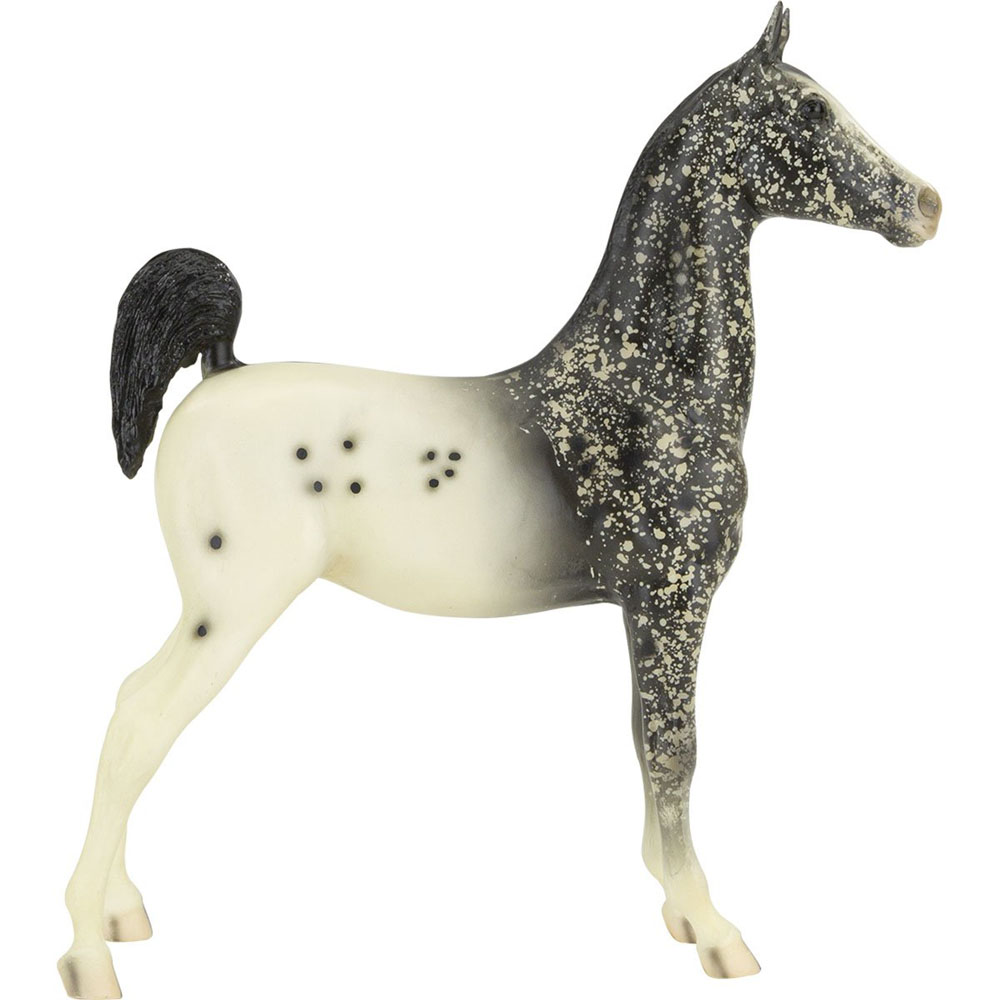
Matte Black Dapple

I spent most of yesterday working in my garden: the weather was pleasant and cooperative, and I really needed to work with my hands. All it needs now is weeding and watering: I’m hoping that Mother Nature takes care of the latter over the next few weeks because I don’t have a whole lot of time to spare. 

(My schedule changed again this week, and while it’s not a huge change, it’s still a little bit disorienting.)

I know he is old news by now, but I’m still a little bummed I didn’t get picked for the Matte Ulysses Test Color. It’s not that I wanted him more than any other of the Test Color Drawings to date, I just thought I’d have a better shot at him than with other molds, colors, and mold/color combos.
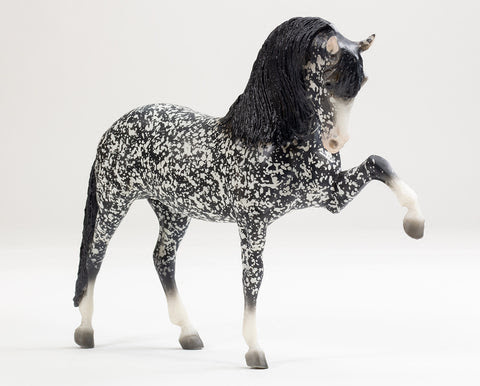
In this instance I definitely saw more grumbling about the price than usual: does the mere absence of a Gloss Finish justify a $1000 price tag?

Remember the prices of the Vintage Club Matte Claude variations were bringing a few years ago? Those make the Matte Ulysses seem like a deal in comparison. 

(I just want to “win” one of these things someday. I am not going to be picky!)

I find it fascinating that there’s such a disparity between the interest in Matte variations of Glossy releases versus Gloss variations of Matte releases. It’s been so ingrained in us that Glossy = More Valuable/Valued that it sometimes blinds us to the reality that this is not always going to be the case.

It’s also interesting that they considered releasing him in a Matte Finish at all. Other than other Test Colors (like that dreamy Black Roan Appaloosa Saddlebred Weanling from last year) I don’t think Matte Black Dapple has even been a thing. Heck, other than the Warehouse Find Dapple Gray Stock Horse Mare, even Matte Resist Dapple Grays haven’t been much of a thing, lately.

Anyway, I have to skedaddle – I have to type up some stuff for work tomorrow, in addition to having to get up earlier, too.

Saturday, March 19, 2022

The Other Guy

I didn’t get pulled from the waitlist for Robin and Nestling either, which at this point is like saying “water is wet”. So, moving on…

In more cheerful news, the wild strawberry seeds I purchased germinated! I’m not a huge fan of strawberries in general, but since I’ve been told that growing any other types of berries is off limits, strawberries it is. 

I also have at least four Berkheya “Zulu Warriors” and one Heliotrope. Technically we’re in between a Zone 5 and 6 here, so I’m probably taking a chance with the Berkheyas. But we do appear to live in a weird little microclimate – the Ageratum I started years ago perennialized! – and the plants are so neat looking that I figured I might as well give it a chance. 

Okay, back to horse stuff. 

I found out about the BreyerFest Workshops before most of the popular ones sold out, but I decided to heed my own advice and not overschedule myself. I’ll wait until after my first live show this year – and the Volunteer selection process – before I decide what else I want to do during the weekend, beside socializing and shopping. 

I was tempted by the Carousel workshops, because once I get caught up on my sewing projects I want to jump into the Little Bits/Paddock Pal scale carousel I’ve been slowly accumulating supplies for. 

Some of the webinar and pre-recorded workshops are also tempting, but as I mentioned before, I’m hesitant to spend much time online at an in-person event. 

Actually, I’m kind of hoping that they include some in-person only competitions, like they did at BreyerWest with the Stablemate Painting. Though I wouldn’t necessarily compete in that one personally because painting is my least favorite part of the customizing process! 

I think that’s one thing that BreyerFest is missing: the spirit of spontaneous competition. Most of the competitions we have at BreyerFest now hinge on a great deal of advance preparation. Things like the Costume Contest, the Live Show, and the Customs Contest all take weeks or months of work. The 5K doesn’t necessarily, but it’s also more of a physical than a creative exercise. I don’t know about you, but by Sunday morning I’m exhausted!   

As a reward for slogging through all this, here’s the other half of the Fighting Stallion lot that included the Gloss from the post previous:

I already had a pretty nice #30 Alabaster, but the deal was too good to pass up, and this example is a little bit different from that one: he doesn’t have the USA mold mark. I’m still uncertain that I am going to keep him, which is why he’s gotten the privilege of window time: keepers can wait, potential sales items cannot.

Unlike the Gloss, the limited amount of gray paint on the Matte version of the White/Alabaster Fighter was painted first and then sealed with a Matte topcoat. (White plastic is not necessarily unpainted or bare plastic, she says for the millionth time…) 

The Matte topcoat wasn’t a cure-all, however: Matte models tend to yellow more quickly and profoundly than the Glosses do, but they also un-yellow pretty quickly too, as long as the weather cooperates. 

Sunday, November 3, 2019

Expectations

And the winner is…


Gloss, as I expected. And this is fine.

For a multitude of reasons the past month has been very stressful, the weather has been very cold, and with the days getting darker sooner I’ve been feeling more than a little down. Something like a Matte rarity would have brightened my mood considerably, even if only temporarily.

Considering Claude’s popularity, it should be enough that I have one at all, and that he’s just as beautiful as when I first saw him.

I should also be happy that he even exists in the first place. I am trying very hard to remind myself of the moment when I saw him for the first time, and living with the thought that he was going to blow everyone’s minds. And being a tiny part of that. 

I am glad to see that next year’s Vintage Club offerings also seem to be going over almost as well. The Powers-That-Be finally seem to be getting it, at least when it comes to Vintage-type stuff.

(More or less: you’ve already seen my opinion on some of the initial 70th Anniversary merchandise. Yoo-hoo guys, I’m right here…)

So there’s that.

I also know that the luck that I do possess is in living in an area where Breyers (in general) are plentiful, and that I have the ability to handpick almost anything. (Except, ironically, Walmart Specials.) Most hobbyists don’t have that.

Yet, and yet.

Thursday, July 18, 2019

Matte White Poodle

The spirit is willing, but the body is weak: my more comprehensive overview of BreyerFest will have to wait a couple more days, until my body stops generating spontaneous naps.

(I knew four straight days in 90+ heat and humidity sapped a lot out of me, but seriously, sleeping in my car at a Kroger parking lot for an hour was not on my agenda for today.)

I do want to cover this guy in some detail, though – one of my handful of hotel finds I persuaded myself I couldn’t live without:


Behold – a Matte variation of the #68 White Poodle! (No, really, he is. I just don’t have the time or energy right now to pull one of my multiple shiny ones from upstairs for comparison.)

Matte White Poodles are one of those things that I simply assumed existed because the Matte Black ones do, but until this previous weekend, I had never actually seen one in person!

Since I couldn’t find a BreyerFest Beethoven at the right price and condition, and the Benasque Blue variation of Bucky was the remotest of long shots, this guy showed up at the right time and at the right price. 

Ironically, both the Matte Black and Black with Blue Collar Poodle were high on my scouting list this year – with the Bucky in this year’s lineup, it seemed like a good time to focus on filling some holes in my Breyer Dog collection – but alas, neither one was to be found.

Which was not a huge surprise – both of those variations are pretty rare – but not as rare as the Matte White Poodle! Funny how that works.

The Matte Black and (now confirmed!) White Poodles are another rare but notable example of Breyer Matte variations being less common than their Glossy counterparts.

And their “rarity” makes sense, too, since the Black and White Poodles were discontinued ca. 1968, right around the time Breyer was transitioning to more realistic (Matte) colors and finishes.

Since everyone is so focused on Glossy = Good, Matte rarities tend to slip by relatively unnoticed. Well, usually: there are always exceptions, of course. (Matte Dark Dapple Gray Running Mare and Foal, anyone?) And me spilling the beans on them here means that eventually it will no longer be the case….

You know, I still don’t have a Woodgrain Poodle, either. I probably should work on that – while he’s one of the slightly scarcer Woodgrains (ca. 1960 through 1964), a lot of hobbyists aren’t into the Nonhorses, so that tends to moderate his prices a bit. In other words, that tends to push him into the affordable (to me) range.

Maybe once all the various stray bits of money promised to me finally make their way here, I’ll consider the splurge.

Saturday, December 22, 2018

Stablemates, Stablemates Everywhere...

FYI: since I received an unexpected – but nonetheless, very welcome – bit of extra Christmas money, Hawthorn is coming home, after all. Yay!

In other news… Reeves is really going all-in on Stablemates next year, huh? And Unicorns. And Unicorn Stablemates….

First, I continue to be impressed by the offerings for the 2019 Stablemates Club. The Gambler’s Choice was revealed to be the Highland Pony – and all four colors are awesome:


Glossy Perlino Blanket Appaloosa sounds like something created by a Random-Special-Run Generator app, and I’m 100 percent in favor of it. (The Stablemate itself, and an App. If someone out there has the potential to do it, make it so!)

I don’t know exactly what’s going on with the Decorator blue-purple-gold snowflake one, but I am intrigued. Was it just a happy painting accident, or based on something – a gemstone, I presume? Curious to know what they call it, too.

My favorite of all the reveals so far has to be the G3 Belgian Priscilla, in Matte Gray Appaloosa with a teal tail ribbon:


Like Charcoal, Gray Appaloosa is another Vintage color that transitioned to Matte only on the Family Arabians. Unlike Charcoal, Matte Gray Appaloosa has shown up since the Family Arabians, most notably the 1980s Hess Stock Horse molds.

Matte finishes have been a part of Breyer’s repertoire since ca. 1960, and many Vintage Matte-finished models are considerably scarcer than their Glossy counterparts – like one of my current obsessions/grails, a Matte Black Large Poodle.

But with the All-Glossy, All-The-Time crowd being as vocal as it is, I don’t see Matte Gray Appaloosa making a huge comeback, either as an independent release or even in the Vintage Club.

This is a shame, because I think a lot of molds – new and old – could really rock the look. (I need a Western Prancing Horse in this color, stat.)

Being the Vintage advocate that I am, it genuinely makes me feel out-of-sorts with my fellow hobbyists, and also makes me feel like I’ve failed as a Vintage Breyer advocate. (*sniff*)

Glossy is great, but seriously, not everything is improved by it. Period.

(And don’t even get me started on the “everything needs a basecoat” crowd!)

Monday, October 16, 2017

The Pendulum Swings

And the hits keep on coming…


… though Fletcher doesn’t technically come out until next year, being the first Collector’s Club Special Run for 2018. This is just a pre-order announcement.

It’s interesting that they’re offering him in both Gloss and Matte, since offering that option with some of the Premier Club releases has led to some difficulties, especially when people start making returns.

Glosses run out, Reeves offers Mattes, people get indignant when that happens and then stomp over to their favorite corner of the Internet to gripe about what an incompetent bunch of doody-heads they are for not obviously making the entire run Glossy, because duh.

Sigh.

Part of the appeal of Gloss Finishes – separate from the “Ooh, shiny!” factor – is that it has been traditionally associated with Vintage models, especially the scarcer and more desirable releases of the late 1950s and early 1960s.

The thing is that Gloss does not automatically mean rare. In many cases, it’s the Matte-finished variation of a Vintage model that’s the scarcer one. How many times, for instance, have you seen a #43 Matte Palomino Western Pony? Or a #71 Matte Walking Horned Hereford Bull?

(I got the former purely by accident, and finding the latter took… years. And years.)

And as far as desirability goes, Breyer gradually phased out Gloss in the 1960s due to collector demand for more realistic-looking models. Liking Glosses in the 1970s and most of the 1980s put you in the minority camp, for sure.

In other words, the pendulum swings. (Speaking of, someday I shall tell you about the BreyerFest where I walked around the hotel and bought every decent Chalky I could find, because nobody else was really looking at them at the time…)

I like a beautiful deep Gloss as much as the next person (that QVC Gloss Bay Justin Morgan Sherman is staring at me right now from behind my monitor) but some models look just as good – or better! – in Matte.

So I am fine with both options on Fletcher, though my initial reaction was tilted a bit in favor of the Matte. My guess is that it’ll be the scarcer of the two finishes too, but that’s only an incidental consideration.

I’m not sure if I’ll even be ordering – it’ll all depend on how well my holiday sales go. It’s a good thing they’re giving us until the end of November to decide.

Wednesday, October 12, 2016

A Short History of Alabaster: Part I

Since I am going to either be away, or occupied with other things through the weekend, I will be queuing up the article I wrote about the history of Alabaster for this year’s Sampler.

Even though Breyer’s history began with a white Western Horse, the term “Alabaster” – the word hobbyists most commonly use to describe white-colored Breyer horses – did not appear in any official Breyer ephemera until ca. 1962.

My recent research has determined the reason why: “Alabaster” was created as a descriptor not just of a color, but a finish. In short, Matte White = Alabaster.

The history of Breyer’s plainest and most basic color, however, is far more complicated than that.

The earliest white-colored Breyer horses of the 1950s were literally White, in both form and name. Models like the Western Horse, Western Pony and Fury Prancer were uniformly described in the ephemera of the time as White: and they were, save for a few touches of gray shading on the hooves and head.

It wasn’t until 1958 that models with more extensive gray shading arrived, in the form of the Old Mold Mare and Foal (and a year later, on the Stallion). While the paint job on the Old Mold Family was very similar to the color we think of as Alabaster (gray manes, tails and body shading) they still weren’t labeled that way. The early ephemera still referred to them as White.


Other white-colored models began to show up shortly after but they were not labeled Alabaster, either. The Shetland Pony, with her gray mane and tail and pink hooves and muzzle, was still White. The Mustang and Five-Gaiter were described as Albino, presumably because the earliest pieces were issued with dark pink eyes, not black ones.

It wasn’t until ca. 1962 that the term “Alabaster” finally appeared in print, to describe the brand new Running Mare and Foal, and a revamped White Fighting Stallion.


What did these three releases have in common? The Running Mare and Foal and the re-released Fighting Stallion all came in a Matte finish. They were followed shortly afterwards by the Rearing Stallion (1965) and Running Stallion (1968), both Matte, and “Alabaster”.

It wasn’t until 1969 that the Family Arabians and the Shetland Pony – among the last remaining glossy White pieces in the Breyer line – were officially labeled Alabasters in existing ephemera. This is almost exactly the same time that Breyer officially began phasing out gloss.

1968 Pricelist:


1969 Pricelist:


I do not think this was a coincidence. Especially since the third white release in the line at the time – the Western Pony – remained glossy. And was still labeled as White.

There seems to be quite a bit of evidence that Breyer was being careful and nuanced when it came to their color terminology in the late 1960s and early 1970s, especially with their expanding repertoire of gray-based colors. One that expanded further with the release of the matte Dapple Gray paint job on the Proud Arabian Stallion in 1971.

To complicate matters even more, the term White was still being used. In spite of the fact that neither the Old Timer (released in 1966) nor the Indian Pony (released in 1970) ever came in a Gloss Finish, they were both consistently described in catalogs and other price lists as White well into the 1970s.


What I think was going on there was that a decision was made to turn that particular descriptor into a term for a matte white finish with heavy, almost Smoke-like body shading.

This “new” White didn’t last long: all subsequent “white” releases in the 1970s and 1980s were labeled Alabaster, regardless of the amount of gray shading they came with.

Sunday, October 25, 2015

Exceptional and Ordinary

The most recent arrivals are not as dirty as the first, but also a bit on the boring side; these are among the nicest of the bunch:


Yep, a Bay Running Foal and a Palomino Rearing Stallion, neither one high on anyone’s want list. Both are standard issue models from the early 1970s: not Chalky, with no molding or painting anomalies.

They are, however, in excellent condition with positively superb shading and coloring. If you’re looking for a quality example of either piece, these are about as nice as they get.

They have that velvety matte finish typical of non-Chalky models from that era too, which is understandably hard to find in mint condition. I’m almost too afraid to touch them, less they pick up a stray burnish mark or two that would mar that appealing softness.

Models like this – simultaneously Exceptional and Ordinary – can be a tough sell, especially online. If hobbyists are going to spend extra for a “premium” example of a common model, they’re not going to go halfway: they’re going to go for the works. That means stickers, boxes, signatures, and unusual (Chalky, Pearly, Glossy) finishes.

Models that are just happen to be really nice…are sort of the silver medalists of the model horse world. You’re going to take it if you can get it, of course, but forever second to the real winner who might be just over the horizon.

So I’ll reserve these guys for either BreyerFest or a live show/swap meet situation, where hobbyists can see just how nice they are in person – and who may not be so willing to cough up the sometimes-insane prices the “Superpremium” models can bring.

(Same thing happens in comic books: the price cliff between “Mint” and “Fine” is a steep one, even if the aesthetic or technical differences are minimal.)

Keeping these two for myself doesn’t seem likely: I have a nice Rearing Stallion in Palomino already, and as far as the Running Foal goes, I’d really rather find one that’s a better match for my semi-gloss Mare with eyewhites.

Thursday, August 6, 2015

The Things We Value

I was doing a little pricing research on eBay this week – a few pieces are already up on MHSP, with more to follow throughout the weekend – and I have to say that I am utterly befuddled by the high prices Flockies are commanding there.

I’m not talking of the rare Regular Runs or Special Runs ones, or the occasional Test pieces that show up, but the undocumented “free range” ones that I had thought the hobby had all agreed were basically Customs.

It's no secret that I am not a big fan of Flockies: they creep me out, especially the ones with the glass eyes. But I will also admit that the ones made by the Riegeseckers for Breyer – the Miniature Series in the Regular Run catalogs, and all the assorted pieces available via holiday mail-order catalogs – have both historical and monetary value. And some people have taste different than my own. (Whatever you want to keep on the shelf in your horse room is your own business!)

These custom ones have some, too – they were sort of a thing in the hobby for a while, oddly enough – but the prices I’ve been seeing seem way out of proportion.

Am I missing something? Is it something I should be glad I missed? Was there a rumor of them being Tests/Culls/Decos under the fake fur-like substance? Is it a bit of bad intel multiplied by a surplus of fun money?

It seems so weird to me; sometimes I understand completely why something becomes popular, desirable, or expensive, but this one makes me shrug my shoulders.

It’s one of the many reasons I try to avoid giving out advice on value and pricing. If I were able to shape the universe as I saw fit, something like this would be more valued than it is:


It’s a Matte Black Pinto Western Pony. Like its Palomino counterpart, the majority of them are Gloss, not Matte. It’s actually a rather scarce piece, in any condition – even body quality, as here.

The Black Pinto is slightly more common than its Palomino counterpart – I see a small handful of them in the wild every year, while the Matte Palomino is about as common as the Matte Walking Horned Hereford Bull, and that one took me nearly a decade to acquire.

She came in what wasn’t supposed to be – but ended up being – a body box lot. She wasn’t the only interesting piece in the lot, but I’ll get to them when the time and moment is right.

Wednesday, July 29, 2015

The Newer Guy

My preliminary inventory says that I came home with money, or at the very least broke even (if I factor in the other expenses – i.e. the car issue). This is another thing to be thankful for, right?

To clarify, I didn’t get the Marshall; other models wandered into the room or into my line of sight, and took priority. Like this guy, down front: the “Matte” Walking Horned Hereford I’d been looking for, at last!


If you were to see him by himself, you might define him as Semi-Gloss, but set him next to a true vintage Gloss – here, a real oldie straight out of the late 1950s/early 1960s – and the difference in the “soft” highlights of the Matte and the “hard” highlights of the Gloss is more obvious.

(Sorry for the weird lighting effects – still working out the kinks with the new camera. But the yellowing on the newer guy is genuine.)

I was very surprised to find him in the Black Horse Ranch Rehoming Sale room, late Friday night, I think? For a variety of reasons I wasn’t able to get into the room any earlier – aside from the scheduling conflicts, I am not a part of the Facebook scene, at all, and the first rounds were given over exclusively to the Facebook participants.

(Not something I’m a fan of, hobby-wise – the last thing on Earth the hobby needs is to wall itself off in gated communities on the Internet – but that’s a separate topic.)

But anyway, in spite of it all, I still managed to glean this treasure from the chaff. That’s sort of my thing, really: pulling that one thing out of a room or collection that nobody else notices.

The Matte Walking Horned Hereford is a genuine rarity, especially when you consider the entirety of the mold’s run before it. From ca. 1956 through the majority of the 1970s – twenty plus years – he came in Gloss, with only the very tail end of the run coming in Matte/Semi-Gloss.

Exactly how long, I’m not sure; the Nonhorse molds were slow but steady sellers, and actual production could well have ceased a few years prior to 1981.

He's another example of how Glossy isn't always all that. Though I doubt that Reeves will ever put the switcheroo on the BreyerFest Surprise Special Runs and make the Mattes variations the scarcer ones.

Matte Finishes seemed to be a thing for me this year, but I’ll elaborate on that later in the week.

Monday, June 11, 2012

Nobody Expects the Family Arabians

Ah, so it is the Mustang after all: "Over 25 years for one color".

That’d be Buckskin, from 1961-1986. The Running Mare came in Bay from 1962-1987, but there’s some controversy over her start date, ranging from 1961 to 1963. I’m pretty sure it’s actually 1962, but that’s not something that’s become "common knowledge" yet, the way the start date on the Mustang is.

The FAS also came in Palomino for 25 years - from ca. 1961/2-1987, but that included a switch from Gloss to Matte, so I’m not sure if that counts. (Note: The Family Arabians were released in Charcoal and Palomino some time after the Bay, Alabaster, Gray Appaloosas and Woodgrains - possibly as late as 1962.)

I’d have no problem at all with an Appaloosa Performance Horse-style Mustang. None at all!

In other news, the flea market continues to be very good to me. Every year I think I’m not going to be able to find enough stuff to sell for BreyerFest, but somehow I always manage to. I’m even contemplating leaving a few things behind. Either that, or manage to find those missing hours in my day and actually get some stuff posted on MH$P.

Now the matter of the model that got me thinking:


An Alabaster Family Arabian Foal? Yeah, really.

First, he’s a true Semi-Gloss: he’s neither Gloss nor Matte. You can’t even describe it as the "High Satin" seen on some of the earliest Matte Finishes, most famously on the Bay Running Mare. You see this little baby in person, and you’d be hard pressed to call it anything other than Semi-Gloss.

It’s true that Breyer was very inconsistent with its Gloss Finish on their early Alabaster Family Arabians. Sometimes they were bright, thick and shiny, and other times they weren’t. There was a reason for this: they seem to have been designated as the " low budget" item of the 1960s. You’re not going to watch the quality control quite as closely with the lower budget items than with the higher ones.

The pricelists, up through 1968, always listed them at a significantly lower price than all of the other available colors. From a ca. 1966/7 pricelist:


The sticker, and all of the models that the Foal came with, dates him to the 1966-1967 era. Around this same time, the Family Arabians transitioned from Gloss to Matte - exactly when is a mystery, though. A price list dated November 1968 makes note of the "attractive matte finish new for these items", but that doesn’t necessarily help us that much, other than give us a latest possible start date.

You’ll also note the Foal’s heavily grayed muzzle. What’s unusual about it - aside from the amount of gray - is that it’s gray at all.

You see, most Gloss Alabaster Foals (and Mares, for that matter) came with pinked muzzles and gray nostrils. (Family Arabian Stallions are no help in the matter, most of them came with gray muzzles from the start.) It’s the Matte Alabasters that tend to have the gray muzzles. (Just a little splotch of it between the nostrils, usually.)

I spent years trying - in vain - to find Matte Finish Alabaster Family Arabians with pink muzzles, on the assumption that the switch to Matte Finish occurred before the switch to grayed muzzles.

Looks like I was looking at the problem all backwards!

Unless she’s something else altogether.

As stated above, the Foal was found in a group of models that date to ca. 1966-1967. Aside from some dust, dirt, and a little wear and tear on some of their stickers, they were in excellent to immaculate condition. The lot also came from a Chicago suburb, which as any astute hobbyist knows, is usually a big flashing red light: WARNING, FORMER BREYER EMPLOYEE COLLECTION AHEAD.

Throw in a piece in the lot that’s just a little more peculiar than average, and then you’ll know why I think that might be the case here, as well.

Friday, July 10, 2009

It's Glossy Season!

It's that time of year again … when Reeves glosses up some regular run horses as live show prizes, and hobbyists collectively lose their minds. I'm always amazed and dumbfounded how a little gloss can turn a boring $40 regular run horse into an scintillating $500 one.

Don't get me wrong: I love me a shiny horse as much as the next girl. I just can't imagine paying that kind of moolah for one. And since I'm not motivated enough to enter the shows where they hand out those kind of goodies, it's not likely I'll ever win one either. I've never been really strongly live-show oriented anyway – and from some of the shenanigans I've heard some hobbyists go through in the pursuit of the almighty SR Prize Glossies – no thanks. The Ninja Pit seems like a saner, safer bet to me.

There used to be a long standing notion in the collecting community that Glossy = More Valuable. It's true in some sense: the Glossy Finish was largely, but not entirely, discontinued around 1966/7. And some, like the Bay Fighting Stallion, were discontinued in Gloss much earlier than that. But a lot of Glossies were made well into the Matte Finish era, such as the Glossy Charcoal Mustang, Fighting Stallion and Running Stallion. While they are certainly quite lovely, they are not necessarily rare – or at least the kind of rare that attracts a high price tag, like a Dapple Black Belgian or a Gloss Bay Fighting Stallion.

What I find especially amusing is that there are actually MATTE finished models that are significantly more rare than their Glossy counterparts. These were usually models that were originally made in Gloss Finish, and only happened to switch to Matte near the very end of their runs. Since they were likely not selling well by then, these pieces are numerically quite rare, especially when compared to the models entire production run.

One notable example may be surprising: it's the Palomino Western Pony. In gloss finish, the Palomino Western Pony is one of the most ubiquitous of vintage Breyer models: it was made from ca. 1953 through 1973, and was the horsey component of the vast majority of the Grooming Kits sold in holiday catalogs during that time period.

Like its bigger brother the Western Horse, most assume that the Palomino Western Pony also made the switch to Matte Finish. And he did. Good luck finding one though: he's so rare that even in the 1997 edition Breyer Molds & Models, Nancy Young thought he was nonexistent.

I have one in my collection, of course:


I hadn't thought him especially rare before then, either: I had found him several years earlier at a local flea market, and being the mildly obsessive variation enthusiast that I am, he was incorporated into my collection without much fanfare. If I had had to go looking for one to fill that hole in my chorus line, I might have noticed his apparent rarity. But I had one already, and not much motivation to upgrade.

I have made it a bit of a game at BreyerFest every year to spot at least one Matte Palomino Western Pony: I don't always succeed. When I do run across one, I often tell the seller about his rarity: it usually results in rolled eyeballs and skeptical eyebrows. A matte finished model that's rare? And it's a Palomino Western Pony? Yeah, right.

There are others, too, but some of them are still on my BreyerFest want list. I will have to demure; I'm on a tighter-than-average budget this year, but I haven't scaled my collecting ambitions back entirely.

Wednesday, May 13, 2009

Matte Clearcoat

Two of my first three models were (and still are!) Chalkies, so the topic has been one of both extreme interest and deep research. I’ve been collecting them and tracking them for years: it’s a far more complicated topic than most collectors realize. It’s further complicated by the fact that a lot of collectors don’t even know what a Chalky looks like. What many collectors advertise as chalkies are nothing of the sort. A lot of them are simply early, matte-finish models with clear topcoats.

The precise date of introduction of the matte finish is debatable: I tend to think the first true matte-finished models were actually the woodgrains, which were introduced sometime around 1959. As for the more horselike colors, I’m not so sure when that occurred - the documentation for that time period is, as I’ve mentioned before, rather thin and hard to date. By 1962 at the latest, I’d think.

What the woodgrains and the early matte finishes have in common is a clear topcoat: after the model was given its basic paint job, it was painted over with a clear, satiny finish, presumably to improve the durability of the paint job. The raw, unpainted plastic was simply not left exposed on a matte finish model. (On gloss finishes, it was hit or miss. Again, a little more complicated than you might imagine.)

This "clearcoat" has some distinguishing characteristics. One, it tends to puddle and drip, just like some glossy finishes do: you can see the dark or yellowish drip marks usually on the underside of the belly and other drip points such and the lower lip, tail tip and (ahem) boy parts. Here's a nice belly spot from a Family Arabian Mare:


A lot of these topcoated models also have "waffle marks" on the bottom of their hooves. Waffle marks look - well, like waffle indentations, and are presumably from the racks that the models were either painted or dried on. Those that don’t have waffle marks often have a rough or dirty footing, sometimes with bits of wood embedded, presumably from another type of rack or shelving.


(Yes, I know this particular model is actually glossy, but this is by far the best example of waffling I have, and the same racks were used anyway.)

Because there is no exposed, translucent white plastic on any part of these models, and they have a rough footing - the two most commonly quoted characteristics of a chalky model - those unfamiliar with a true chalky often confuse these matte-finished models for one.

The clearcoats were gradually phased out starting in the late 1960s; partly out of cost and possibly through improved painting techniques. It’s still used occasionally on alabaster or light gray paint jobs, for both added durability and a little extra added finish.

The clearcoat also came with a couple of liabilities. One, it tended to turn yellow. A lot of collectors don’t know this, but there are two different ways a model can yellow: either the plastic can turn yellow, or the finish can. And the finish that turns yellow is the clearcoat, not the colored undercoat. (Yellowed clearcoats respond better to bleaching techniques than yellowed plastic, though.)

Clear topcoats can also turn slightly opaque, or "milky": it’s usually seen in the nooks and crannies of a model where the clear topcoat could puddle. It’s most commonly seen on woodgrains, but no matte-finished model is immune (it’s less visible on alabasters and grays, of course.)

Aside from the yellowing and milkiness issues, the matte clearcoat finishes have generally held up better over time than the later unclearcoated ones. I've found that they're definitely easier to clean: most everyday dings and scuff marks don't get past the clearcoat. A little gentle cleaning, and a brief trip to a sunny window, and voila! As good as new.